
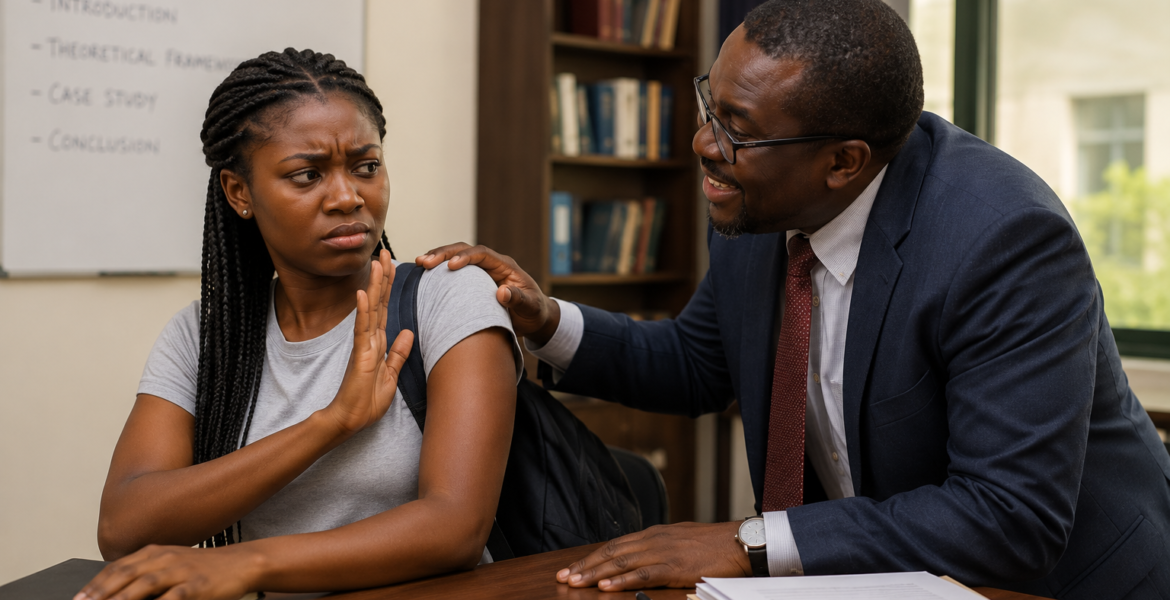
Following intense national discussions regarding student safety Ghana, the Education Ministry recently issued a firm directive to tertiary institutions across the country: enforce your sexual harassment policies immediately. Having a beautifully written document gathering dust in an administrative office simply no longer cuts it. While universities constantly claim they protect their students, a policy only provides real protection if victims know exactly who to call and what to expect. If a lecturer demands favors for grades, where do you actually go? Here is how the major public universities require you to handle complaints.
If you attend the University of Ghana (UG), you do not have to rely on your department heads to find justice. You can file complaints directly with the university’s dedicated Anti-Sexual Harassment Committee (ASHC). This independent body exists specifically to receive reports and handle sensitive cases without departmental interference.

At KNUST, the system offers you flexibility. You take your grievance to the university’s established channels, which provide two distinct options. You can choose an informal reporting track if you simply want the administration to step in and make the inappropriate behavior stop, or you can choose the formal track to push for official disciplinary action against the perpetrator.
UCC handles complaints through a more structured administrative chain. Students report incidents directly to their Department Heads, Deans, or Directors. These university officials hold a strict, mandatory obligation to immediately forward your case directly to the Chair of the Sexual Harassment Committee for further action.
For students at UEW and UDS, the institutional policies strictly condemn harassment and provide formal reporting channels through the university management. However, researchers and student representatives note a harsh reality: students at these institutions often hesitate to use the laid-down procedures because they fear academic victimization and reprisal.

Once you file a formal complaint, the investigative clock officially starts ticking. The university takes over the burden of proof. At schools like GCTU, the committee operates under a strict timeline—requiring them to conclude their investigation within thirty working days. Throughout this investigative period, campus policies actively discourage retaliation, explicitly forbidding the accused staff member or student from contacting or intimidating you.
When a committee finds an individual guilty of violating a sexual harassment policy Ghana, the recommended sanctions are far from a simple slap on the wrist. Depending on the severity of the campus consent Ghana violation, policies like the one at UDS allow the university administration to enforce a mandatory public apology, transfer the offender to a different department, or dismiss them from the institution entirely.
The current reporting system remains far from perfect, and many students still rightfully fear that speaking up might secretly damage their final grades. However, these established committees hold genuine disciplinary power. By understanding and utilizing your specific university’s reporting structure, you refuse to suffer in silence and force the administration to uphold its promise to protect you. Combating university sexual harassment Ghana starts with knowing exactly how to weaponize your rights.