
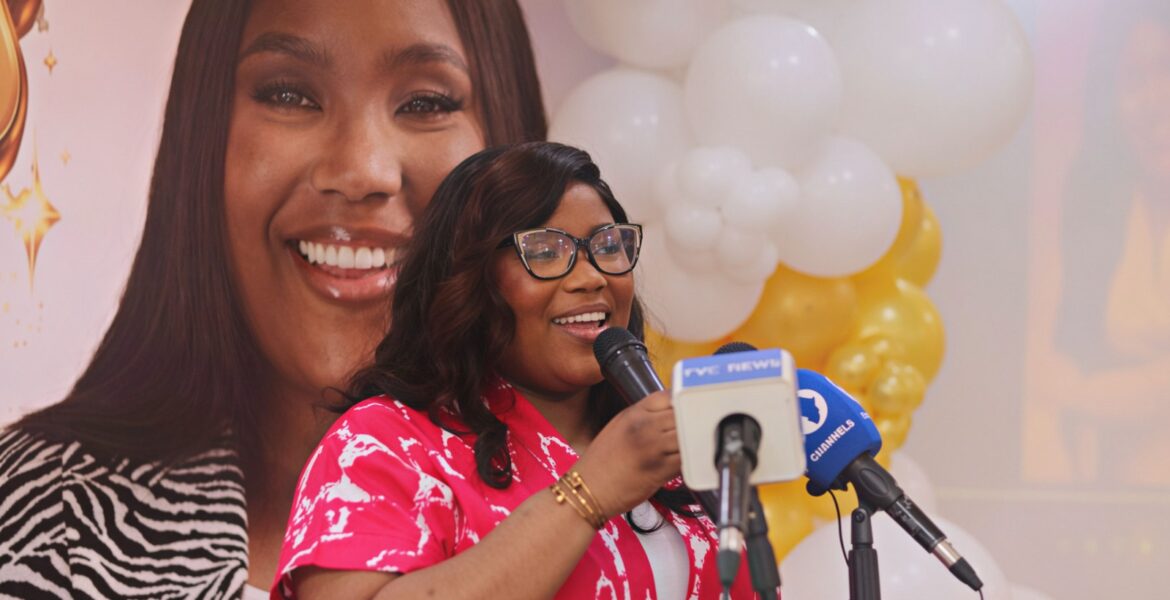
“You may have lost your physical sight, but the sight within you is stronger than any external light.” — Ejiro Sharon Okotie
At 11 years old, Ejiro Sharon Okotie woke up to darkness. For a moment, she probably expected the world to return to normal. Perhaps she thought the room was dark, or that her eyes needed time to adjust.
But the darkness remained.
What started as a sickness while she was away at boarding school would become the defining moment of her childhood. After days of illness, hospital visits and uncertainty, doctors discovered she had cerebrospinal meningitis—a severe infection that had already caused permanent damage to her eyes.
The diagnosis was devastating.
Her mother was told that her daughter would never see again. But what doctors saw as the end of one chapter became the beginning of another.
More than three decades later, Ejiro Sharon Okotie is living proof that losing one ability does not mean losing one’s purpose.
Today, she is a Gender, Disability and Social Inclusion expert, a trained counsellor, a Chevening Scholar, a Mandela Washington Fellow, a researcher, an author and the founder of Hope Inspired Foundation for Women and Youth with Disabilities.
Her life is a powerful reminder that disability is not a death sentence. It is a different journey.
Before the Darkness: The Little Girl Who Loved Life
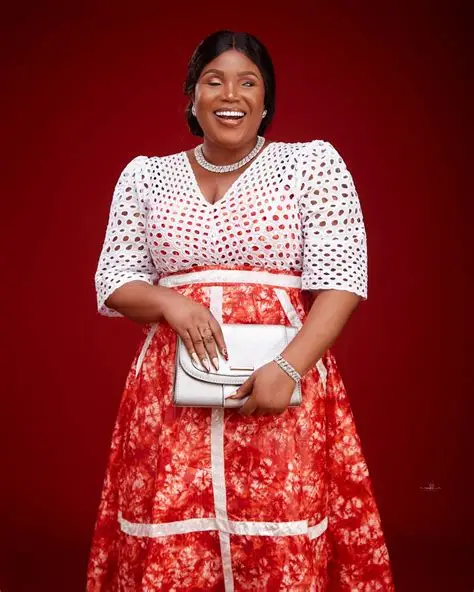
Before blindness became part of her identity, Ejiro was simply a young girl enjoying childhood. Born in Okpara Island, Delta State, she grew up under the care of her mother, Elder Caroline Amujiane, alongside her twin sister, Sherida, and older sister, Joy.
Her mother was a single parent who raised her daughters with determination after separating from their father before the twins were born. Although life was not filled with luxury, Ejiro remembers her childhood with warmth.
She was quiet and gentle, while her twin sister was more outspoken and protective.
“I was very reserved, quiet and gentle,” she recalls. “My twin was fiercer and more stubborn, and she would fight for me.”
As a child, Ejiro enjoyed the simple things—church activities, playing games with friends, and helping her mother with daily tasks.
She remembers running errands, going to the market and learning responsibility at a young age.
Her mother would send her to buy groceries with a written list and money. Even as a child, she knew how to bargain, collect the right change and carefully carry everything home.
Sometimes, she would use whatever remained from her transport fare to buy sweets before walking back.
Those moments may have seemed ordinary then, but they were quietly building independence and confidence that she would later need.
“I was a lively, active child,” she says. “We didn’t have luxury, but I never felt like I lacked anything. Life felt very full.”
The Illness That Changed Everything
In September 1995, Ejiro’s life took a sudden turn. Her mother had decided to send her and her older sister to boarding school. While her sister attended Federal Government College, Kuje, Abuja, Ejiro gained admission into Christ Ambassador College in Sabo, Kaduna.
However, after only three months in school, she became seriously ill. At first, doctors believed it was malaria and typhoid. But her condition worsened quickly. Within days, she became so weak that she could no longer walk.
Her mother rushed to bring her home and searched for medical help. Eventually, she was admitted to a private hospital near where her mother worked. Five days later, Ejiro woke up. But something was different. She could not see.
“I woke up to full darkness,” she says.
When she told her mother, doctors examined her and discovered a thick coating covering both of her eyes. Immediately, they knew something more serious was happening. She was referred to the National Eye Hospital, and from there, to Ahmadu Bello University Teaching Hospital, where doctors conducted further tests. The result was heartbreaking. Ejiro had cerebrospinal meningitis.
Although treatment began immediately, the damage to her eyes had already occurred. She spent six weeks in hospital. There were countless injections, painful procedures and moments of uncertainty. At the end of it all, a doctor at Guinness Eye Hospital gave her mother the news every parent fears.
Her daughter would never see again. The doctor advised her to enrol Ejiro in a school for blind children so she could continue with her life. That was the moment their new reality began.
Choosing Hope When Everything Changed
For Ejiro’s mother, the news was overwhelming. She had dreams for her daughter. She had imagined a future filled with possibilities. Suddenly, she had to confront a different path.
But even at only 11 years old, Ejiro noticed her mother’s pain.And instead of allowing herself to completely break, she tried to become a source of strength.
“I immediately decided I wasn’t going to let it break me,” she explains.
“I remember asking her, ‘Mummy, whose report will you believe? I choose to believe the report of the Lord.’”
Looking back, Ejiro understands that she was trying to comfort her mother as much as she was comforting herself. She did not yet fully understand everything she had lost. But she knew one thing—her life was not over. That belief would carry her through every challenge that followed.
Learning to Live Again
After losing her sight at 11 years old, Ejiro Sharon Okotie had to learn life all over again. Simple things that once happened naturally—moving around independently, studying, interacting with friends and navigating unfamiliar spaces—suddenly required patience, training and courage.
However, one thing never changed: her family’s belief that blindness would not stop her from becoming someone.
That belief became the foundation upon which she rebuilt her life.
Finding Her Place in a World She Could No Longer See
The first challenge after losing her sight was not only physical. It was emotional. Returning to church, where she had once played freely with friends, became painful.
The children around her did not understand what had happened. They would run off to play, forgetting that she could no longer follow them.
“I would just sit there crying, waiting for my mum to start looking for me and send someone to come and get me,” she recalls.
Those moments made her feel invisible. But that season did not last forever. When her family moved from Kaduna back to Sapele, Delta State, Ejiro entered a new environment where people only knew the person she was becoming—not the girl she used to be.
Instead of seeing blindness first, they saw Ejiro. Her grandmother’s neighbours showed her kindness. They included her, supported her and treated her with dignity.
For the first time after losing her sight, she began to understand that life could still be full.
A Mother Determined to Protect Her Future
One of the biggest concerns for Ejiro’s mother was education. In their family, education was not optional. It was a pathway to independence and opportunity.
When her mother visited a school for blind students in Kaduna, she met a blind teacher who gave her important advice.
“Don’t waste time looking for a miracle,” the teacher told her. “Let her continue her life. God can do it while she’s rebuilding her life.”
Those words changed everything. Rather than waiting for a miracle before moving forward, her mother decided to help Ejiro build a new future.
She enrolled her at Pacelli School for the Blind in Lagos in 1997. There, Ejiro entered a rehabilitation programme designed to teach her the skills she needed to navigate the world independently. Her teacher, Mr Tunde Mohammed, whom she affectionately called Uncle Tunde, became an important figure in her transformation.
By October 1998, she returned to Queen’s College, Lagos, joining the exact level she had stopped before losing her sight. She did not repeat a class.
Breaking Barriers Through Education
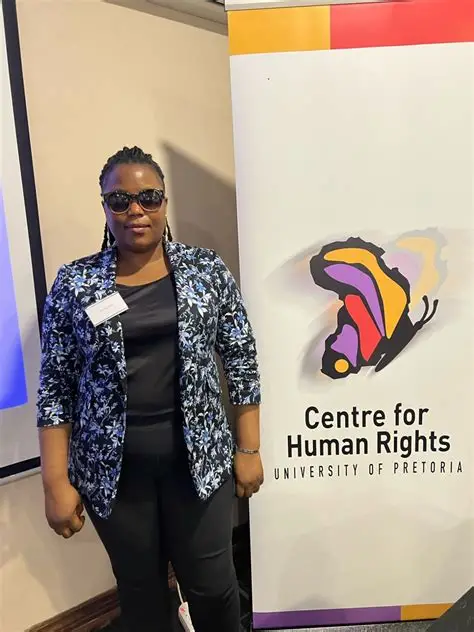
Secondary school was only the beginning. University presented a completely different challenge. At the University of Benin (UNIBEN), Ejiro became the first blind student in her department studying International Studies and Diplomacy. Unlike today, assistive technology was limited.
There were no advanced screen readers or easily accessible digital textbooks. She relied on a Braille machine and a manual typewriter. Every examination required intense preparation. With a manual typewriter, mistakes could not easily be corrected. So before writing, she had to memorise each question, organise her thoughts and carefully plan every answer.
Despite those difficulties, she succeeded. She completed her diploma programme with Distinction. Then, through direct entry, she continued into the 200 level and graduated with a Second Class Upper degree in International Studies and Diplomacy.
Her achievements were not simply academic victories.They were proof that disability did not determine her capacity.
Technology Changed the Game
When Ejiro began her master’s programme at the University of Lagos, she encountered a major turning point. She learned how to use the JAWS screen reader software. For the first time, technology gave her greater independence.
She could access documents, read digital materials, search online resources and edit her work more efficiently. What had once required enormous effort became more manageable.
That opportunity opened even more doors. She went on to earn three master’s degrees:
- A master’s degree in Public and International Affairs from the University of Lagos.
- A master’s degree in Development Studies from the Institute of Development Studies at the University of Sussex through the prestigious Chevening Scholarship.
- A master’s degree in Marriage and Family Therapy from Triune Biblical University in the United States.
Her journey became a powerful example of what happens when opportunity meets determination.
Ejiro Sharon Okotie Is Changing the Narrative Around Disability
Ejiro Sharon Okotie’s journey is one of turning personal adversity into a mission that empowers others. After losing her sight to cerebrospinal meningitis at age 11, she refused to let blindness define her future. Instead, she became a leading advocate for women and young people with disabilities, challenging stereotypes and proving that disability does not equate to inability.
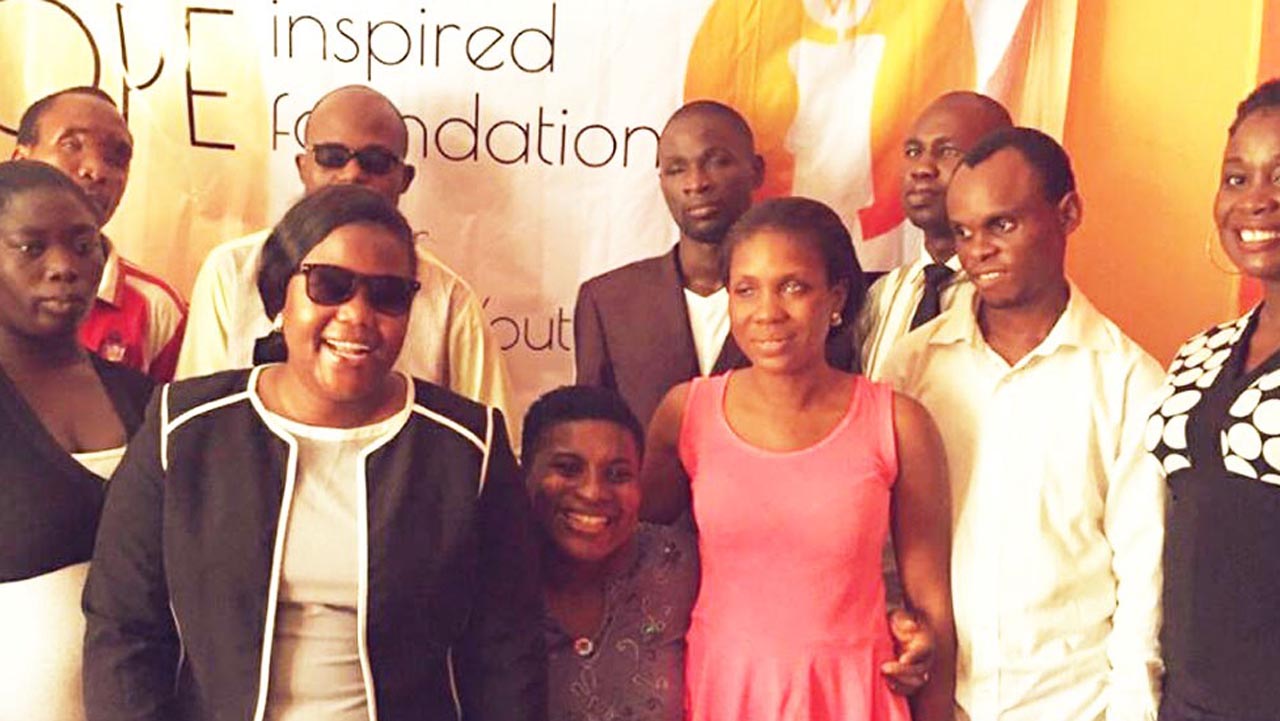
Inspired by her experiences during her National Youth Service Corps (NYSC), Ejiro founded the Hope Inspired Foundation for Women and Youth with Disabilities (HIFWYD) in 2015. Through the foundation, she has impacted more than 22,000 beneficiaries by promoting education, leadership, self-advocacy and inclusion.
Beyond advocacy, Ejiro is passionate about changing society’s perception of women with disabilities. She encourages confidence, independence and self-worth, while reminding the public that people with disabilities deserve to be seen for their abilities rather than their limitations.
Her passion for helping others also led her into counselling. After earning a master’s degree in Marriage and Family Therapy, she launched LRS Therapy Hub to provide emotional and psychological support to individuals navigating life’s challenges.
Ejiro also documented her remarkable journey in her memoir, Beyond the Darkness: A Journey from Loss to Purpose, where she reflects on losing her sight, finding purpose and honouring the unwavering support of her family, especially her mother.
At the heart of her story is a powerful message: life’s darkest moments can become the beginning of a greater purpose. Through advocacy, counselling and storytelling, Ejiro continues to inspire people to embrace resilience, challenge societal barriers and create opportunities for themselves and others.