
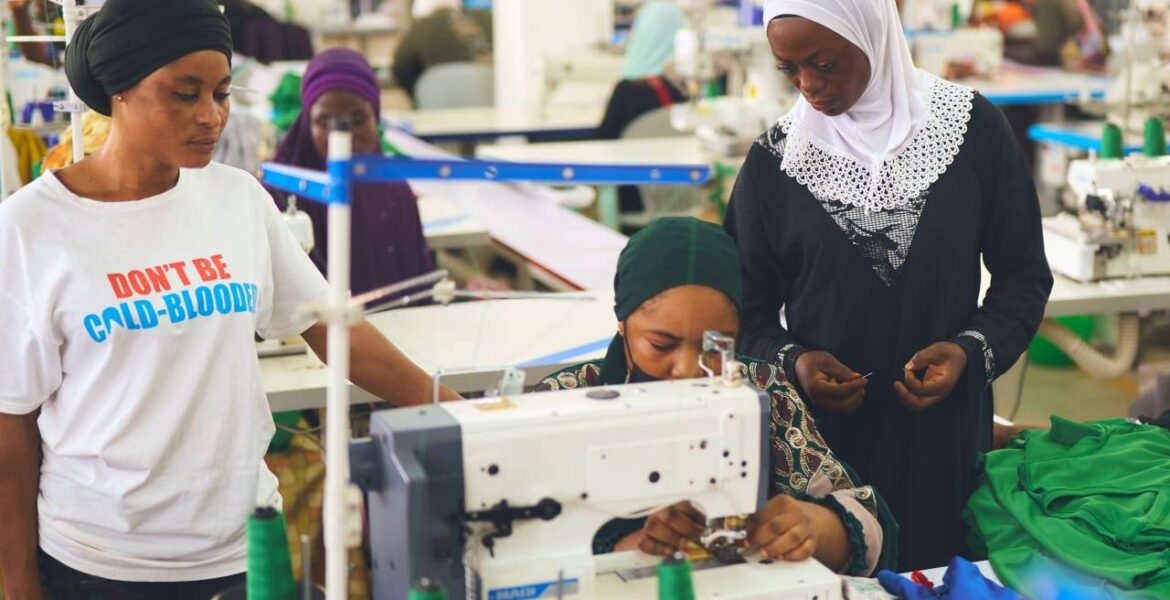
When the cameras stopped flashing at the Friday inauguration of Northshore Apparel Ghana Limited in Savelugu, the real test began. Politicians and executives celebrated a massive win for garment manufacturing in Ghana, throwing around impressive but occasionally conflicting employment figures. Cutting through the inauguration hype requires looking at the actual data.
During the launch, President John Dramani Mahama stated that the Savelugu apparel factory had “already created at least 2,000 jobs”. Meanwhile, the Ghana News Agency verified that the company has trained and deployed more than 2,300 operators for its initial phases. The much larger figure of 30,000 jobs frequently cited by officials actually represents the projected maximum capacity for the entire planned Northshore Industrial Hub over the coming years, not the current payroll. What remains indisputable is the demographic breakdown: roughly 80 percent of the factory’s current employees are young women.
Many of these Northshore women employees are drawn from vulnerable demographics who would otherwise migrate to southern cities like Accra or Kumasi to work in the informal sector as head porters (kayaye).
To understand the worker perspective, the Ghanaian Times interviewed actual trainees at the facility. Fati Ibrahim, a trainee beneficiary, confirmed that the factory offers “valuable skills and secure decent-wage employment within their own communities”. She emphasized that the young women in the municipality are eager to sustain the factory’s operations because it actively transforms their economic lives and provides a stable alternative to the harsh realities of migrating south for menial labor.
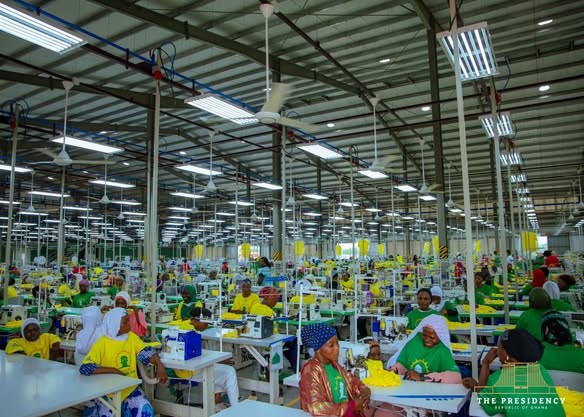
The physical working conditions also represent a significant upgrade from informal labor. The €10.2 million, zero-waste facility operates heavily on solar power and includes a 1,500-square-meter dining facility, dedicated workers’ changing rooms, and an in-house clinic staffed by a full-time nurse and a visiting doctor. Because the factory is designed to support the government’s 24-hour economy initiative, it will run multiple shifts, which increases earning opportunities but will also require strict oversight regarding late-night worker safety and shift-work regulations.
A critical factor in evaluating jobs for women in Northern Ghana is how the employer handles childcare and maternity realities. Official facility reports confirm that Northshore has built an on-site crèche specifically for nursing mothers. While establishing a crèche is a massive improvement over standard factory conditions, labor advocates must continue to monitor whether its capacity can adequately serve a female-dominated workforce that already exceeds 1,600 women.
When it comes to disability inclusion, Northshore has moved beyond standard corporate public relations to implement verifiable, structured hiring practices. The facility is explicitly equipped with infrastructure to support workers with disabilities. More importantly, the company has signed a cooperative agreement with the Savelugu School for the Deaf, pledging guaranteed employment opportunities for its students, ensuring that women factory workers in Ghana with disabilities have a secure pathway into the formal economy.
Based on documented investments and verified worker testimonies, Northshore offers a highly structured, formal alternative to the precarious informal sector. The factory provides clean, sustainable infrastructure, healthcare access, and wages that workers themselves describe as decent.
However, as the facility scales up toward its full 200-sewing-line capacity, the true test of its labor quality will emerge. Sustaining these roles as “good jobs” will depend entirely on how effectively management expands its welfare facilities, scales its crèche, and manages shift-work conditions for the thousands of women driving the production lines.